The London Adventurer II

For the second of our three part series, we explore in and around London on two wheels. We will take you from the instagram worthy sites along the Thames to out-the-saddle climbs on Box Hill. Whether you are the most recreational cyclist looking for a fun Saturday afternoon or whether you are desperate for a new training route, we have you covered. As always, we would love to hear from you about your favourite routes in London.

1. London to Brighton
Distance: 87 km (one way) 174 km (return trip)

Difficulty: Hard (one way) and very hard (return trip)

Start Point: Richmond Park

London to Brighton is now one of the most popular cycling routes in the area. The most famous event is the annual ‘London to Brighton’ charity race, where all proceeds go to charities of your choice. It has been running from 1976 and has grown from a group of 34 people to over 14,000 now! There is something quite novel about cycling south from the Capital City, and not stopping until the sea won’t let you go any further.

There are lots of places to start but we like to start from Richmond Park, then follow the the route (GPX file here) through the Surrey Hills and the South Downs. When you reach the mighty Ditchling Beacon, you only have one big push before it is downhill all the way to the finish!

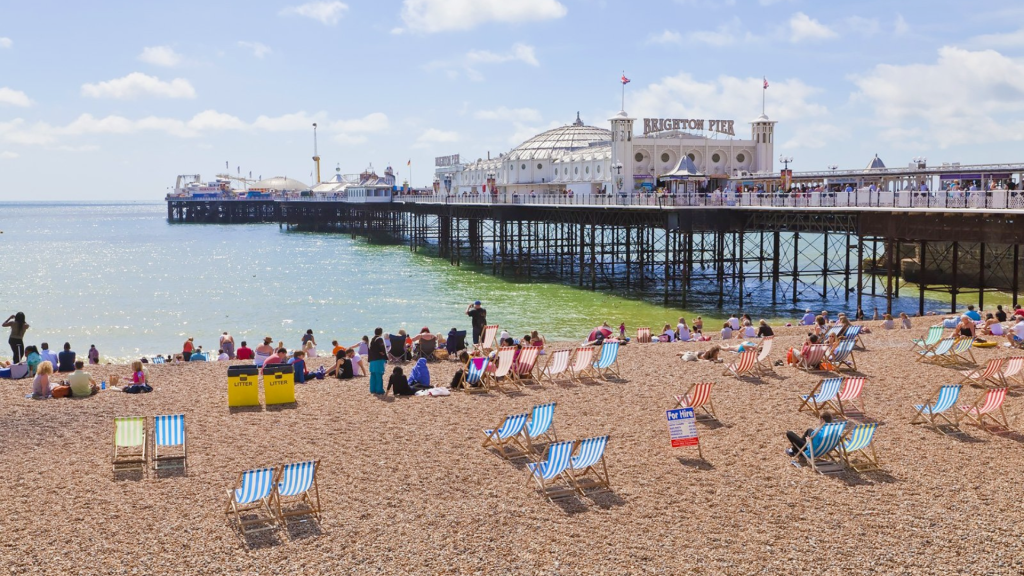
As you get to the beach you will be rewarded with a host of fantastic eateries and bars. There are plenty of deck chairs on the beach so grab yourself a drink and celebrate (be aware of the seagulls!). When ready to leave, its a 5 minute cycle to the main station and then a £12 ticket back into London.

2. Richmond Park

Distance: 12 km per lap

Difficulty: Medium

Start Point: Roehampton Gate

Richmond Park is the largest green area within Greater London. It is the preferred training location for many cyclists in the city. It has hills, beautiful landscapes, plenty of wildlife, a couple of great coffee-stops and is easy to get to. If you arrive between 7am and 9 am (particularly at the weekend) so will often see the professionals out training too as they fly by you!

Richmond is not only a great place for road cycling but has a stunning gravel route and is also fun to explore on mountain bike. There is a cycle rental shop close to Roehampton Gate and their proceeds go to maintaining the park and the cycle infrastructure. If you have a family it is also a great place to have a walk and get a little bit of fresh air – something that is becoming harder to find in many parts of London!

3. Hampton Court Palace to Windsor Castle
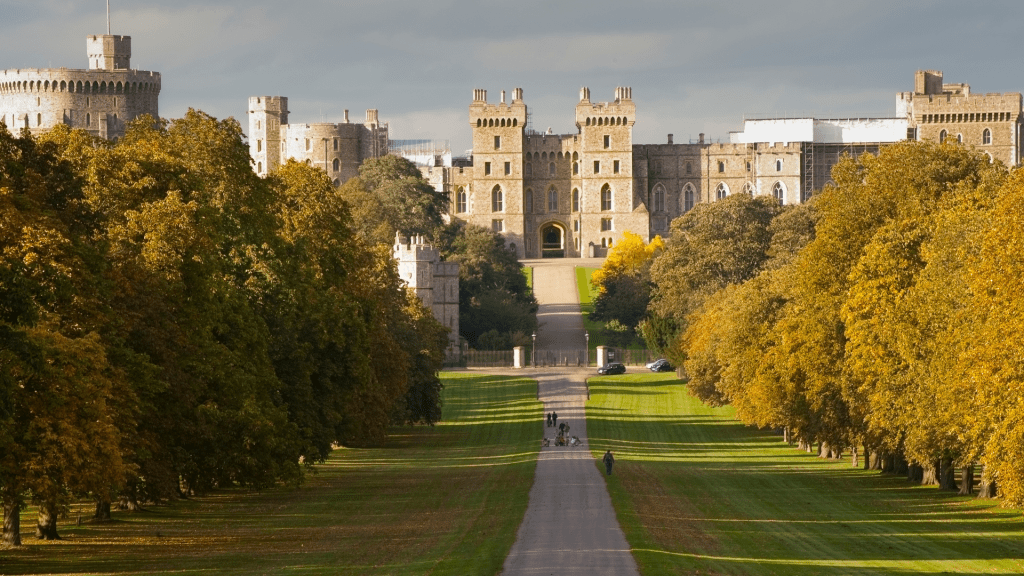
Distance: 60 km

Difficulty: Medium

Start Point: Hampton Court Palace (near Kingston)

You can either start cycling from home and make your way to Hampton Court or you can take the train and start there. The Overground services are incredibly easy to use with bikes (unlike many train operators now…). This route starts and finishes with a marvel of British Architecture and History. Hampton Court was the home of Henry 8th and the deer park was his personal hunting ground! Windsor Castle was the home of Her Majesty The Queen, now King Charles. If you start early and get to Windsor before 11am you can also enjoy the Changing Of The Guard Ceremony which happens every day!

As you head off, use the National Cycle Route 4 which will take you along the river all the way out to Windsor Great Park. Feel free to spend some time exploring (stay on the roads or you will get shouted at!), a bite to eat and glorious views of the Castle! As you leave Windsor you will say wave goodbye to Route 4 and cycle to the Queen Mother Reservoir. From here you will cycle past London Heathrow Airport and then along the road directly back to the front of Hampton Court Palace. Well done!

Get the GPX route here.

4. Battersea Park To Greenwich
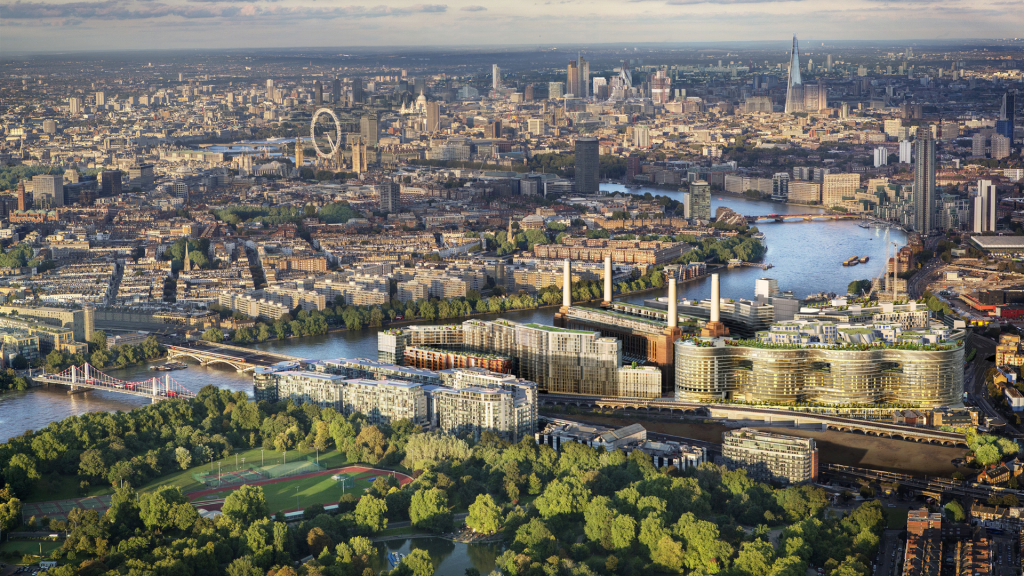
Distance: 16 km

Difficulty: Easy

Start Point: Battersea Park

We are back on National Cycle Route 4 but this time we are heading west! This is a real leisurely ride that can be done on anything from a Santander (Borris) bike through to your time trial racing machine (if you really want). Make sure to get some great video as you cycle by the London Eye, the Globe Theatre and the Tate Modern – all of which you can stop off at if you are in tourist mode. This route is generally low-traffic meaning that you can really relax and enjoy it. If you’re feeling peckish make sure to hit the famous Borough Market for some classy street food coming from all over the world. Once fuelled and on the road, it’s a gentle cycle all the way to the Royal Observatory at Greenwich.

5. Thames Valley Cycle Path

Distance: 160km

Difficulty: Hard

Start Point: Putney Bridge

This one is in here for the real adventurers out there! This is either a long day in the saddle or a lovely thing to do over a weekend. Once again we are taking use of the traffic free zones of the National Cycle Network and following it from Putney Bridge, through Thames Valley and out to Oxford. More than half of the route is completely traffic free!

Most of the route is pretty flat until you get to the Chiltern Hills (close to Oxford). Here you can choose to spend some time exploring the area and add some elevation, or you can take the direct route along the path and take yourself to Oxford for some well earned grub!

Get the GPX file here.

Thanks for reading!

We always love to hear from you so if there is anything that you want us to write about, or want help planning your next adventure, we are here to help! Get in touch Here.

See you out there!

Bruce

https://www.instagram.com/kitupadventures/

Outdoor Equipment: The Benefits Of Rental

When we started KitUp we wanted to make a better solution for 2 groups of people: those that already own lots of outdoor kit, and those that do not. Yes…that means everyone!! We had enough of being limited to rubbish rental kit (or having to pay through the nose for ‘premium rental packages’) nd also know the faff and the limitations of travelling with your kit. With that in mind, we decided to do something about it.

Let us tell you how we have made your life just that little bit easier. First we will take the position of the kit owner, then we will talk about the kit renter. Here goes.

Challenges For Kit Owners

If you have ever found yourself in any of these situations (or similar) you will be all too familiar of the difficulties of travelling with outdoor equipment. From international travel through airports to local travel by car or train, taking our much loved kit is sometimes more trouble than its worth (although we rarely acknowledge this).

Having spent years travelling with bikes, surfboards and skis on flights, here are a few of the situations that I have found that made me think about alternate solutions.

  1. Surfboard damage. A few years ago I was in South Africa on a surf trip and found the board that I had been looking for, for years. A beautiful fish with glassed-in find (they cannot come out) so I bought it and quickly fell in love with it. When flying back to London Heathrow I spent about 3 hours wrapping it in memory foam, bubble wrap and then into a board bag. When I got home there was serious damage in 3 locations and I was devastated. Luckily the talented Ding Doctor in Bristol was able to save it.
  2. Long travel times. On a trip to the south of France for some skiing and cycling we decided to drive because we had far too much kit to take the train or try and fly. This added an extra day on either side and became far more expensive than expected. When you add up the fuel costs, ferry or train, tolls through France and food/water throughout the day it adds up very quickly. We realised that even if we used the ‘premium rental packages’ the cost would have been about the same, minus the travel faff!
  3. Outdoor kit evolves quickly. When most of us make the exciting decision to invest in new kit, it’s usually because we are about to go away on a trip, so convince ourselves that its worthwhile. However, the next use can often be many months away and by that time, newer better iterations have already been developed. The average UK skier will have to use their skis on at least 1 trip per year for 6 – 8 years to get back the cost that renting each time would equate to. If you were to spend a day on new skis compared to those 8 years ago, you would notice significant upgrades in weight and performance!
  4. Irregular use. As much as I would love to spend every day skiing in the mountains or surfing, the unfortunate reality of life is that this is rare. So much of the equipment bought and stored gets very little use meaning that we are needlessly manufacturing and transporting kit around the world resulting in increased pollution from manufacture and additional carbon emissions in the logistics of getting it to the shop and then into your home. The outdoor industry needs to start taking sustainability and climate change more seriously – the natural environment is what brings us so much pleasure yet little is being done to conserve it. Rental is a way that each of us can do our part.

Challenges For Kit Renters

With that being said, the current rental solutions are often far from the answer! I have been into so many ski, bike and surfboard rental companies (UK and abroad) where the available selection is awful. For many companies, courses are where they focus their time, hire is just a side hustle for kit that isn’t being used. This is by no-means brushing every company with this brush, but the great ones can be very hard to find. Here are the problems that we have found:

  1. Access to quality kit. I was recently in Brazil, one of the surf capitals of the world and was amazed at how difficult it was to find a decent board to surf at Copacabana and Ipanema beaches (the 2 main beaches in Rio). There was not a single place to rent along Copacabana despite the number of surfers in the water and the high quality waves. I was told to go to Ipanema to rent, but the boards available on the beach looked like they came out of the original ‘The Endless Summer’ – a wonderful film but not exactly what I was looking for…
  2. High rental prices. This really does speak for itself. On the same Brazil trip mentioned above, we wanted to hire bikes for the day to explore the beautiful forest surrounding a town we were visiting. There were tourist agencies offering guided cycle rides at the cost of nearly £100 each for 4 hours (Crazy!!) and we were told that if we wanted to go off and do our own thing we could, but the price would be the same! Just one story of mental rental prices…
  3. Inconvenient. For both instances mentioned above, they took a lot of time and effort for little gain. I spent about 3 hours looking for a surfboard and my wife and I then spent another morning trying to get out for a cycle. On a once in a lifetime trip, the feeling of time being wasted is horrible and its something we want to cut out as much as possible.

We Solved It!

So far this doesn’t paint the best picture, but wait…Its changing with KitUp!

For kit owners, KitUp allows you to rent out your kit when you aren’t using it. Simple. With the current economic climate every little helps and now you can make your kit work for you and earn some of that initial investment back over time. It also means that your overall carbon footprint and impact on the environment will decrease as you are allowing others to get into the outdoors without having to buy new kit. Your kit will get more use throughout its life, exactly as it was designed!

For those looking for kit, you can now see exactly what is available, where it is, how much it will cost and then can have a conversation with owner or rental business without wasting a minute, all within the app! We have seen great quality equipment being listed at amazing prices and we are so excited at the thought of this on a global scale. Imagine going anywhere in the world and logging into one app to find kit, instructors, the top locations and meet new people?!

Give it a try. You won’t regret it.

The KitUp Summer Guide

 KitUp App   FAQ’s   Instagram   Facebook 

The KitUp Summer Guide

What you will read in the next 5 minutes: Our 5 favourite places to surf, paddle, cycle and walk in the UK this summer.  Start your next #KitUpAdventure 

Surf – remember the suncream!

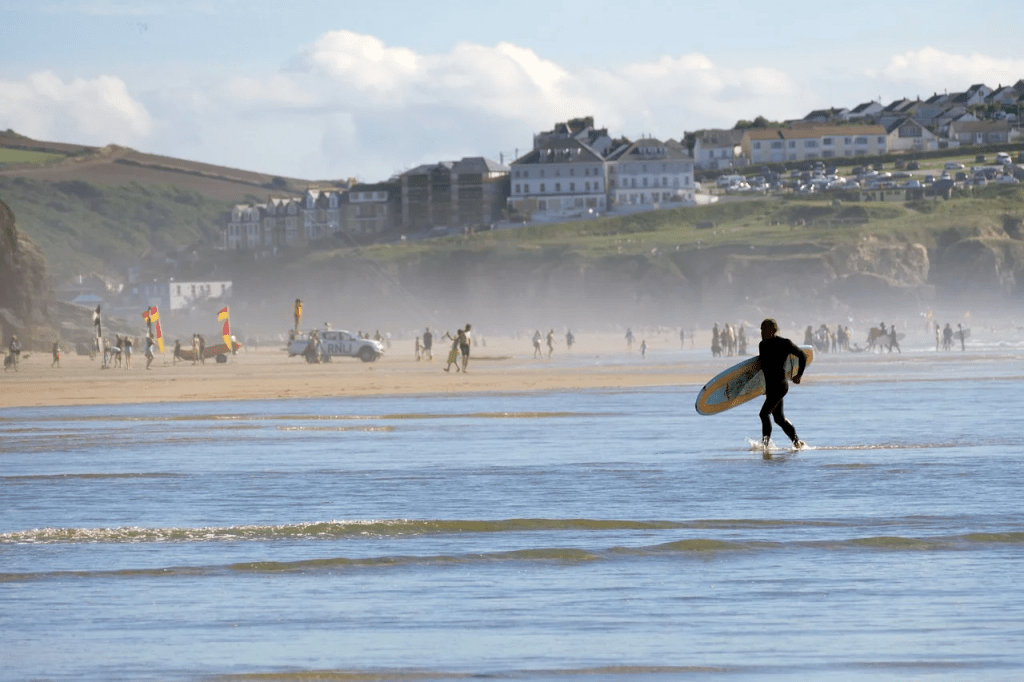
Summer surfing might not offer so many of the thrills of winter but that does not mean you can’t enjoy it. The water is finally warm(er), the sun is out and there is plenty of fun to be had on higher volume boards. It is also the perfect time to learn. If you want some bigger waves head straight to number 5.

1. Woolacombe, North Devon. Suitable for all experience levels and lovely town to explore after your surf. Woolacombe has been voted one of the best surfing beaches in the UK many times!

2. Newgale, Pembrokeshire. Suitable for all experience levels but can form a fast hollow wave at times – experienced surfers only. Great cafe/surf shop on the beach too.

3. Saltburn, Yorkshire. Picturesque seaside town. Beach is suitable for all with a point break at the south end. This gets very shallow at low tide so be careful of the rocks.

4. Pease Bay, Berwickshire. Being close to Edinburgh, this little beach-break can get busy when the conditions are good. Stunning beach that is suitable for all levels.

5. The Wave, Bristol (this might be cheating, but its so much fun). Without a doubt the best and most consistent surf in the UK this summer…It is not the same as being out in the ocean but if you crave a goos surf, this is the place for you. Pick your style, no battling for waves and suitable for all levels.

Paddle – Best spots for a summer adventure.

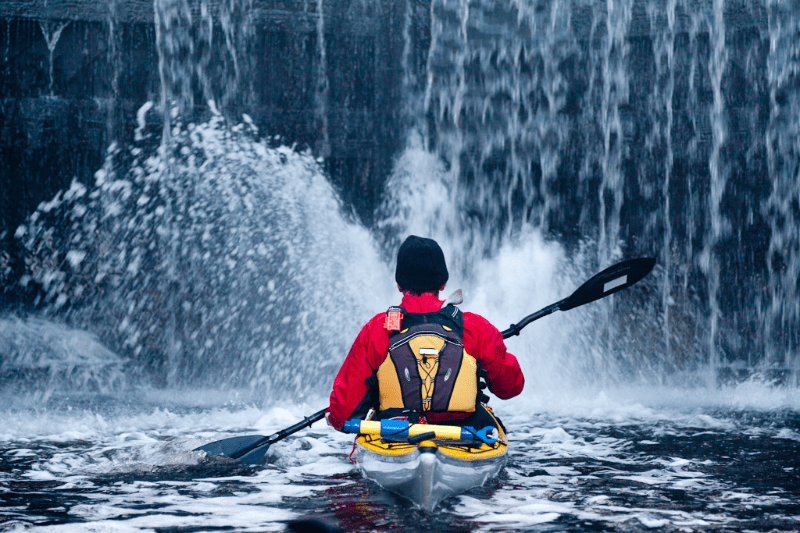
The summer is a great time to explore the British waterways by paddle. Whether you want to SUP across beautiful lakes or sheltered ocean bays or want day-long sea kayaking trips there is something here for all.

1. Ullswater, Lake District (SUP & kayak). One of the most famous spots in the Lake district and for good reason; it is often calm and beautiful. It’s an easy place for most people to paddle out from by either SUP or kayak.

2. Durdle Door, Dorset (SUP & kayak). Quite possibly the most iconic beach on the south coast with the enormous archway just meters from the beach. If you like Insta shots then this is the place to be! Top tip, get there early or parking will be very hard to come by.

3. Stackpole Quay, Pembrokeshire (SUP & kayak). Pembrokeshire is one of our favourite adventure spots across the UK for everything. This route from Stackpole to Barafundle Bay is a great spot to try and see the dolphins, porpoises and basking sharks that often play in the Bay.

4. River Cam, Cambridge (best for SUP). Most explore the architectural tour by punt, but we can do better! Take your SUP and explore at your own pace, stopping off for lunch at one of the many river-side restaurants along the way. Great for a day out with friends.

5. Oban, Argyll & Bute (sea kayak route). If you are looking for a real paddle adventure this summer then look no further. It feels remote, the weather is unpredictable and the landscapes are breathtaking. You will find no fresher fish and get to beaches that nobody else can. What more do yo need?!

Bike – Do you road, gravel or mountain?

In the UK we are spoilt for choice when it comes to cycling. From quiet roads through the Cotswolds to the downhill mountain-biking centres of the Black Mountains and Cairngorms there is something for all and never too far away. It is also much easier to find the motivation to get out in the summer, so let’s celebrate that!

1. Ballater. The heart of the Scottish Highlands, Ballater holds some of the finest MTB routes in the country like Heartbreak Ridge as well as great access to the winding roads within the Cairngorms National Park. Whatever your style, it won’t disappoint.

2. Cotswolds. Villages like Castle Combe that are nestled away in steep valleys give some amazing hill climbs and beautiful views. It is always easy to finish rides at traditional pubs, or in the centre of Bath if you want to explore the city at the heart of many period dramas!

3. Brecon Beacons & the Black Mountains. If you like the idea of epic scenery, buses taking you to the top of the mountains for you to then fly down them like a dog going after a stick then you need to get to the Black Mountains Cycling Centre ASAP. If that isn’t quite for you, there are also amazing gravel routes to explore and quiet country roads that will give you some serious elevation data for STAVA.

4. Isle of Wight. One of the best day-long cycling adventures in the UK. It all starts with a ferry ride from Portsmouth to Cowes (Red Funnel Ferries) which takes about 45 minutes. If you get this nice and early you will have time for a quick breakfast in Cowes before starting your 106 km circumnavigation of the wonderful island. Top-Tip: check the wind forecasts before deciding which way to go (clockwise or anti-clockwise).

5. Cheddar Gorge. There are some charming road cycling routes that all take you through the Gorge. If you have not been, we cannot recommend it enough, it feels like something from a film, especially in late spring when everything is flowering. Other than road cycling there are some great trails that give equally good views across Somerset.

Trail – make the most of the long days with a few long hikes.

We are all part of this KitUp Community because we love to explore and there is no better way of doing that, than on our own two feet. Walking through wild places connects us back with nature and there is now such a plethora of science telling us how essential this is for our own mental fitness. So far, picking 5 adventures for each activity has been tough, but this is on a whole new level. We could write books on the hikes that we recommend but will keep it short here! 

1. The Quiraing. The Isle of Skye is filled with beautiful hiking route but the needles of Quiraing are a spectacular sight (photo above). Other famous walks on Skye take you to the Fairy Pools and to the Old Man of Storr.

2. The West Highland Way. This 150 Km hike takes you from Milngavie in Glasgow to Fort William. It takes you from countryside parks to loch-shores and open moorlands to jutting mountains. It usually takes 3-5 days to complete but there are plenty of places to stop along the way. A great challenge to set yourself.

3. Kinder Scout. This full-day circular hike winds its way around a vast upland plateau. En route, walkers will pass the dramatic waterfall of Kinder Downfall, and can complete the hike with an optional but entertaining scramble across Grindsbrook Clough. This is just one of the many great days to be had in the Peak District.

4. Yorkshire 3 peaks. If you want a BIG day then look no further! This route cover 24 miles and has more than 1500m of elevation. It covers the peaks of Pen-y-ghent, Whernside and Ingleborough and if you are attempting ‘The Challenge‘ then you will be aiming for less than 12 hours. Best of luck, better get going!

5. Snowdon summit. You may not know this but there are 6 separate routes for getting to the summit of Snowdon. They vary in difficulty but all tend to be between 7 – 9 miles (and take about 6hrs there and back). This is just one of the many walks in the area and if you really want to get a multi-activity trip in, why not pair it with a surf at Surf Snowdonia or a cycle across the hills?!

Stay Safe This Summer

2021 was a record year for many things, including the number of rescues by the Royal National Lifeboat Association – more than 40,000! At KitUp we want everyone to make the most of the summer but we also want to reduce risks. When you decide to go to the breach, make sure you have thought about some of these questions:

1. Does the beach have lifeguards? This is a great resource for understanding what rescue facilities are where as well as having access to the top tips around water safety.

2. What is the weather going to do? This is particularly important for planning paddles on rivers, especially in areas prone to flash floods. In 2021 we saw some awful accidents with stand up paddlers that had not realised there was going to be intense rainfall and it resulted in tragic loss of life. Plan ahead + know the risks = far safer fun.

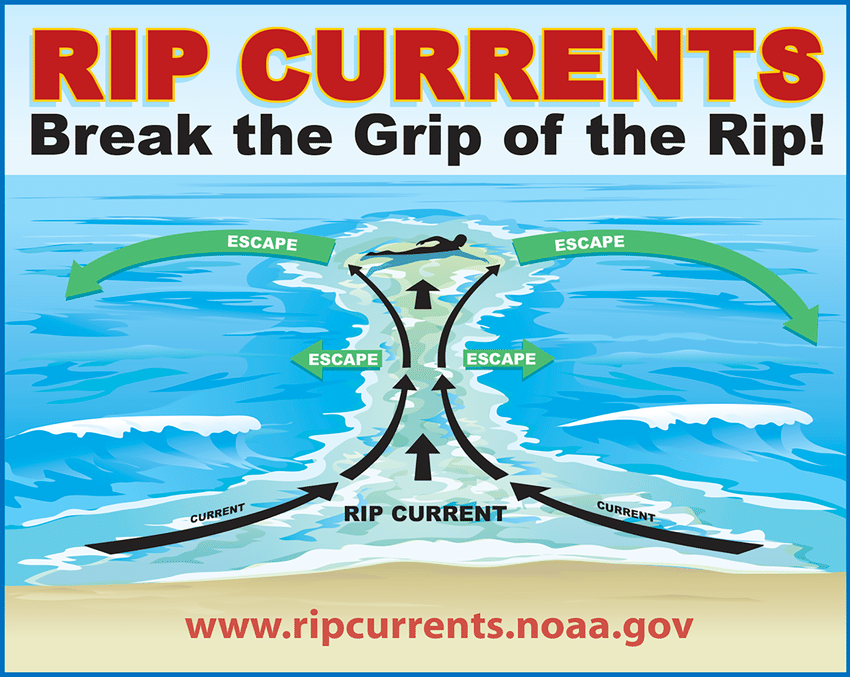
3. Do you know about rip tides? The number one cause of RNLI call out at beaches is people being pulled out to sea in rip tides. Rip’s are areas where the water is trying to get back out to sea far faster than at other points. You will see surfers use them as they are so much faster to get out behind the breaking zone. For swimmers, if you get caught, remember: stay calm and DO NOT fight against the current. Swim out to the side, parallel with the beach until you are free of the current and then come back in.

If you are enjoying the content in our news letters, please share it with your friends and encourage them to join the community by signing up HERE. You can also follow us on Instagram, Facebook & Twitter. If you would like us to answer your questions in the next newsletter, drop us an email and we will be sure to give you a shoutout!